



Packrafting Opens New Frontiers in Wilderness Exploration
Packrafting is revolutionizing wilderness trips by allowing paddlers to access rivers at lower water levels never before navigable. This lightweight approach to exploration kayaking opens new routes and remote areas to adventurers across Australia.
For the first time, packrafting gives paddlers the ability to tackle rivers that were previously out of reach, even at low water levels. Canoes Plus Adventure Experience is leading this, helping explorers unlock new wilderness trips and routes that could not be done before.
How Packrafting Is Changing the Way Paddlers Explore Wild Rivers and Remote Areas
Australia, victoria - March 29, 2026
Packrafting is quietly changing everything for paddlers who have long stared at maps and wondered what lies beyond the next ridgeline or downstream of a shallow, rocky stretch that no conventional boat could handle. For the first time in the history of river exploration, paddlers have a practical tool that lets them go where canoes, kayaks, and rafts simply cannot. That tool is the packraft, and it is opening up wilderness trips and remote waterways across Australia in ways that were never possible before.
The core reason packrafting is such a powerful exploration tool comes down to its unique combination of portability and performance at low water levels. Traditional river craft demand a certain depth and volume of water to float and maneuver safely. When water levels drop, those boats become liabilities. Paddlers either wait for rain, skip the river entirely, or drag their gear through shallow sections in frustrating and sometimes dangerous conditions. Packrafts change that equation completely. Their shallow draft and lightweight construction mean they can float and be paddled in water depths that would strand any other boat. This is not a marginal improvement. It is a genuinely new capability, one that has never existed in accessible, affordable, and practical form before packrafting arrived on the scene.
For exploration kayaking enthusiasts and river adventurers who have spent years limited by water levels and the sheer bulk of traditional gear, this shift is enormous. Rivers that were previously written off as unrunnable outside of flood conditions are now viable destinations. Creek systems that drain remote mountain ranges and run shallow for most of the year are suddenly on the table. Gorges and canyons that required a perfect window of seasonal flow to attempt are now accessible to anyone willing to strap a packraft to their back and hike in. The gatekeeping function that water levels used to perform on river exploration has been dramatically weakened.
Canoes Plus Adventure Experience has been at the forefront of this movement in Australia, helping paddlers understand not just how to use a packraft, but how to think differently about wilderness trips and route planning now that this tool exists. The company has been working with explorers to identify rivers and regions that were previously overlooked precisely because they lacked the water levels needed for conventional paddling. Those same rivers are now becoming genuine destinations, and the routes being opened up represent a new chapter in Australian wilderness exploration.
What makes packrafting particularly well suited to exploration is that it solves more than one problem at the same time. Access has always been one of the great limiting factors in river exploration. Many of the most spectacular rivers and waterways in Australia are not accessible by road. They sit deep inside national parks, behind long stretches of rugged terrain, or at the end of multi-day hikes. Getting a canoe or kayak to these places has historically required helicopters, significant logistical support, or simply accepting that the trip was not feasible for most people. A packraft rolls up small enough to fit inside a standard hiking pack and weighs only a few kilograms. A paddler can simply hike in, inflate the packraft at the water's edge, paddle the river, deflate and pack up at the takeout, and hike out. The entire journey becomes possible for one person or a small group moving under their own power.
This packraft-and-hike approach is transforming the concept of a wilderness trip in Australia. Where once a remote river journey required either a well-funded expedition with external support or a permanent high water level to justify the effort of getting a heavy boat to the put-in, packrafting makes the same journey achievable on a weekend. The barriers of cost, logistics, and physical effort have all dropped significantly. This is bringing a new wave of explorers into wild river environments that have seen very little human traffic historically.
The exploration kayaking community has taken particular notice of what packrafting makes possible in terms of first descents and new route documentation. A first descent of a river - the first recorded paddled navigation of a stretch of water - used to be the domain of highly experienced expedition teams with significant resources. Packrafting has not made first descents easy, but it has made them far more accessible. Rivers that lacked the water volume to attract serious kayak expeditions are now being scouted and paddled for the first time. The information coming back from these trips is building a new body of knowledge about Australian river systems that did not exist before.
Low water levels specifically deserve attention here because their significance as a packrafting advantage is often underestimated by people who have not spent time on the water. In much of Australia, the window of time when rivers run at levels suitable for conventional paddling is narrow. Seasonal rainfall patterns mean that many river systems are only at useful depth for weeks rather than months. Outside those windows, the rivers sit low, rocky, and shallow. For most paddlers, this means most rivers are off limits for most of the year. Packrafting changes the math on this dramatically. Because packrafts are designed to handle shallow, rocky water - and because their inflatable construction means they can absorb contact with rocks without the damage that would ruin a fiberglass or composite boat - they extend the paddling season on rivers that were previously limited to a brief annual window.
This seasonal extension is not just a convenience. It represents a genuine expansion of the exploratory potential of Australian rivers. A paddler using a packraft can return to the same river system multiple times across different seasons and water conditions, building a comprehensive picture of how it changes and what it offers. That kind of repeated, low-water access has never been practical before, and it is producing a richer understanding of these waterways than was possible when paddlers could only visit during peak flow.
Canoes Plus Adventure Experience has been guiding this understanding with both practical knowledge and logistical support for wilderness trips. The company recognizes that the shift packrafting represents is not just about equipment - it is about a fundamentally different philosophy of exploration. Paddlers are increasingly approaching rivers as part of a larger landscape to move through rather than as isolated water features to be driven to, paddled, and driven away from. Packrafting enables and encourages a more integrated style of wilderness travel where the paddling is part of a broader journey through wild country.
This integration is producing wilderness trips that were simply not possible before. Routes that combine long-distance hiking with river paddling, that cross mountain ranges and descend through river systems to coastal areas, or that link multiple river drainages through overland portages - these routes exist now in a practical form because of packrafting. They were theoretical possibilities before, but the weight and bulk of conventional paddling equipment made them impractical for most people. Packrafts, at one to three kilograms and the size of a day pack when deflated, make these multi-discipline wilderness journeys achievable.
The environmental dimension of packrafting is also worth noting. Because packrafts allow access to rivers at lower water levels and outside peak season, paddlers are distributing their presence across a wider range of conditions and times rather than concentrating impact during the brief windows when conventional paddling is possible. Groups are also smaller, given the self-supported nature of most packrafting wilderness trips. These factors combine to mean that the expansion of access that packrafting brings does not necessarily translate into the same kind of concentrated environmental impact that has sometimes been associated with popular paddling destinations.
Australia has an extraordinary diversity of river systems, ranging from the braided glacial-style rivers of the high country to the tropical river gorges of the north, the red rock canyons of the interior, and the coastal creek systems of the south and east. Many of these systems remain genuinely underexplored from a paddling perspective. The rivers that have historically received the most attention are the ones that are easiest to access and that run at adequate levels for conventional kayaking or canoeing. The rest - the majority of Australian river country by area - has been largely passed over. Packrafting is beginning to address that imbalance.
The community forming around packrafting in Australia is one that tends to value exploration, self-reliance, and the kind of wilderness travel that goes beyond established tracks and known routes. These are paddlers who are genuinely interested in going to places that have not been paddled before, in running rivers that have no beta, and in building the skills and judgment needed to navigate unknown terrain with minimal support. Canoes Plus Adventure Experience has positioned itself as a partner for this community, providing equipment, training, and the kind of accumulated knowledge about Australian rivers that helps paddlers make informed decisions about where and when to go.
The broader paddling world is watching this shift with interest. Exploration kayaking has always attracted people who want to push into unknown territory, but the practical constraints of conventional equipment have limited how far that impulse could go. Packrafting removes a significant number of those constraints. The rivers that exist beyond the end of the road, the ones that run shallow through remote country, the ones that require hiking to reach and hiking to leave - these are now legitimate destinations rather than distant aspirations.
The new avenues being opened by packrafting are not just geographical. They represent a new way of thinking about what a wilderness trip can be, what rivers are accessible, and what it means to explore wild country under your own power. That shift is still in its early stages, but its direction is clear. The limits that water levels, weight, and logistics once placed on river exploration in Australia are loosening, and the map of what is possible is expanding.
Packrafting Opens New Frontiers in Wilderness Exploration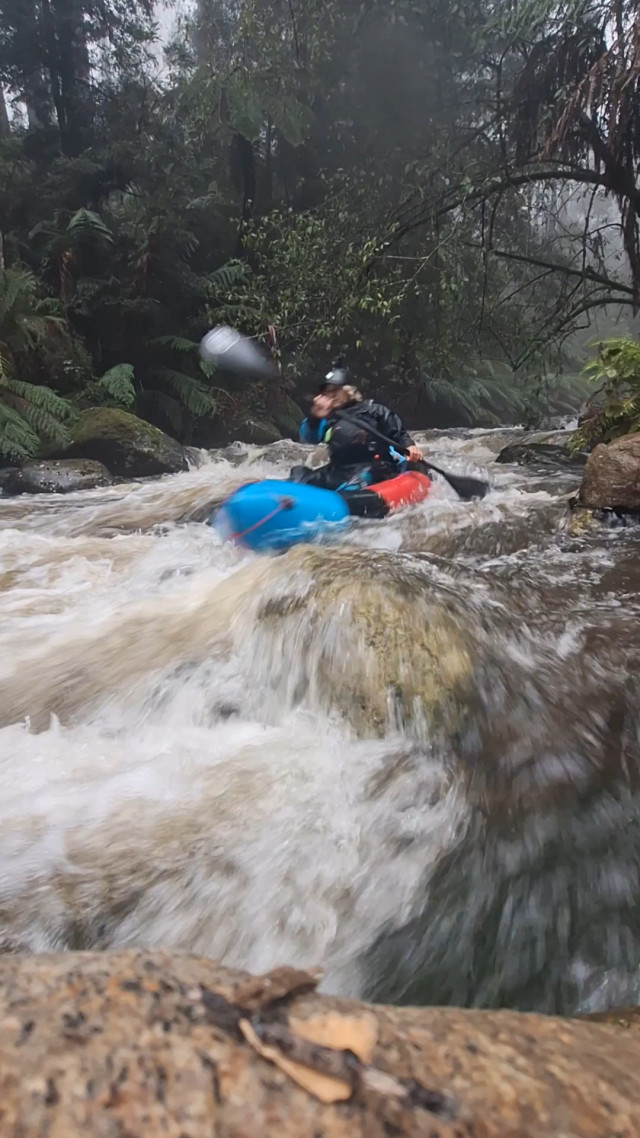 
Welcome Visitor 4
To distribute this article more widely To manage this article or write your own article simply LOGIN
| ||||
